This is a chart of stringed instrument tunings. Instruments are listed alphabetically by their most commonly known name.[1]
Terminology
A course may consist of one or more strings.[2]
Courses are listed reading from left to right facing the front of the instrument, with the instrument standing vertically. On a majority of instruments, this places the notes from low to high pitch. Exceptions exist:
- Instruments using reentrant tuning (e.g., the charango) may have a high string before a low string.
- Instruments strung in the reverse direction (e.g., mountain dulcimer) are noted with the highest sounding courses on the left and the lowest to the right.
- A few instruments exist in "right-hand" and "left-hand" versions; left-handed instruments are not included here as separate entries, as their tuning is identical to the right-hand version, but with the strings in reverse order (e.g., a left-handed guitar).
Strings within a course are also given from left to right, facing the front of the instrument, with it standing vertically. Single-string courses are separated by spaces; multiple-string courses (i.e. paired or tripled strings) are shown with courses separated by bullet characters (•).
Pitch: Unless otherwise noted, contemporary western standard pitch (A4 = 440 Hz) and 12-tone equal temperament are assumed.[3]
Octaves are given in scientific pitch notation, with Middle C written as "C4". (The 'A' above Middle C would then be written as "A4"; the next higher octave begins on "C5"; the next lower octave on "C3"; etc.)[4]
Because stringed instruments are easily re-tuned, the concept of a "standard tuning" is somewhat flexible. Some instruments:
- have a designated standard tuning (e.g., violin; guitar)
- have more than one tuning considered "standard" (e.g., mejorana, ukulele)
- do not have a standard tuning but rather a "common" tuning that is used more frequently than others (e.g., banjo; lap steel guitar)
- are typically re-tuned to suit the music being played or the voice being accompanied and have no set "standard" at all (e.g., đàn nguyệt; Appalachian dulcimer)
Where more than one common tuning exists, the most common is given first and labeled "Standard" or "Standard/common". Other tunings will then be given under the heading "Alternates".
A
| Instrument | Strings & Courses | Tuning(s) | Alternative Names | Origin | style="background: #7ad;" scope="col" width'"106" |Notes | Picture |
|---|---|---|---|---|---|---|
| Ahenk | 12 strings 6 courses | Standard/common: A3 A3•B3 B3•E4 E4•A4 A4•D5 D5•G5 G5 Alternates: May also use various oud tunings | Turkey | |||
| Ajayu | 12 strings 5 courses | Standard/common: A A•E E•A A•C C C•F F F Alternate:
| Chile | A very recent instrument, invented in 2007 | ||
| Akkordolia | 4 strings 4 courses | F2 A2 C3 F3 | Taishogoto, Bulbul tarang, Benju | Germany & Austria / Japan / India / Pakistan | There are also a number of drone strings, the number and tuning of which vary widely. | |
| Akonting | 3 courses 3 strings | Common: Casamance: D3 G3 F4 Gambian: C3 F3 E4 | Ekonting, Bunchundo, Econtin, Konting | Senegal | Often strung with fishing line. A rare 4-string version also exists. | |
| Amzad | 1 string 1 course | No standard tuning; tuned to any convenient note. | Imzad | Niger, Mali, Algeria | Horse hair string. | |
| Archlute | 27 strings 14 courses | F1 F2•G1 G2•A1 A2•B1 B2•C2 C3• D2 D3•E2 E3•F2 F3•G2 G2•C2 C2• F3 F3•A3 A3•D4 D4•G4 | Arciliuto, Erzlaute | Europe | Number of courses could vary from 11–14, and the number of strings from 21–27. | 12-course, 23-string archlute: |
| Armonico | 7 strings 6 courses | E3•A3•D4•G4 G4•B3•E4 | Cuba | |||
| Arpeggione | 6 strings 6 courses | E2 A2 D3 G3 B3 E4 | Vienna, Austria | Rare. Tuning is same as guitar. | ||
| Autoharp | 36 strings 36 courses | F2 G2 C3 D3 E3 F3 F3 G3 A3 A3 B3 C4 C4 D4 D4 E4 F4 F4 G4 G4 A4 A4 B4 C5 C5 D5 D5 E5 F5 F5 G5 G5 A5 A5 B5 C6 | Chord zither | USA | Instruments with additional strings exist (from 37 – 48 total strings), but are very rare. |
B
| Instrument | Strings & Courses | Tuning(s) | Alternative Names | Origin | style="background: #7ad;" scope="col" width'"134" |Notes | Picture |
|---|---|---|---|---|---|---|
| Baglama | 7 strings 3 courses | top to bottom: G2 G3•D3 D3•A2 A3 A3 | Bağlama, Saz, Tanbura, Çöğür | Turkey | See Bağlama | |
| Baglamas | 6 strings 3 courses | D4 D5•A4 A4•D5 D5 | Baglama, Baglama Saz, Baglamadaki | Greece | Standard aka "Modal D" | |
| Bajo quinto | 10 strings 5 courses | A2 A1•D3 D2•G2 G2•C3 C3•F3 F3 | Mexico | True 10-string bajo quintos are made, but many so-called "bajo quintos" are really bajo sextos with the lowest course removed. | ||
| Bajo sexto | 12 strings 6 courses | Standard/common (all fourths): E2 E1•A2 A1•D3 D2•G2 G2•C3 C3•F3 F3 Alternate:
E2 E1•A2 A1•D3 D2•G2 G2•B2 B2•E3 E3 | Mexico | In practice the bottom course (2 strings) is often removed, making the instrument effectively a bajo quinto. | ||
| Balalaika, alto | 3 strings 3 courses | E3 E3 A3 | Alto | Russia | See Ekkel (1997) for all Balalaika tunings.[5] | |
| Balalaika, bass | 3 strings 3 courses | Standard: E2 A2 D3 Old orchestral:
| Bass | Russia | ||
| Balalaika, contrabass | 3 strings 3 courses | Standard: E1 A1 D2 Old orchestral:
| Contrabass | Russia | ||
| Balalaika, descant | 3 strings 3 courses | E5 E5 A5 | Descant | Russia | Obsolete | |
| Balalaika, piccolo | 3 strings 3 courses | Standard: B4 E5 A5 Old orchestral:
| Piccolo | Russia | Rare | |
| Balalaika, prima | 3 strings 3 courses | Standard/common: E4 E4 A4 Alternates:
| Prima | Russia | This is the standard instrument of the balalaika family | |
| Balalaika, prima, 6-string | 6 strings 3 courses | Standard: E4 E4 • E4 E4 • A4 A4 Alternates:
| Prima | Russia | A more recent development, professionals consider these inferior to 3-string instruments. | |
| Balalaika, secunda | 3 strings 3 courses | A3 A3 D4 | Secunda | Russia | Often just a prima with altered tuning, though slightly larger secundas are also made. | |
| Balalaika, tenor | 3 strings 3 courses | A2 A2 D3 | Tenor | Russia | Obsolete | |
| Bandola Andina Colombiana | 16 strings 6 courses | F3 F3•B3 B3•E4 E4 E4•A4 A4 A4•D5 D5 D5•G5 G5 G5 | Colombia | |||
| Bandola Llanera | 4 strings 4 courses | A2 D3 A3 E4 | Venezuela | |||
| Bandola Oriental | 8 strings 4 courses | G3 G3•D4 D4•A4 A4•E5 E5 | Venezuela | |||
| Bandolin | 15 strings 5 courses | E5 E4 E5•A5 A4 A5•D5 D5 D5•F5 F5 F5•B5 B5 B5 | Ecuador | |||
| Bandurria, Philippine | 14 strings 6 courses | F3•B3 B3•E4 E4•A4 A4 A4•D5 D5 D5•G5 G5 G5 | Philippines | One octave higher than the Philippine laud. | ||
| Bandurria, Spanish | 12 strings 6 courses | G3 G3•C4 C4•F4 F4•B4 B4•E5 E5•A5 A5 | Spain | Standard tuning aka "Spanish tuning", one octave higher than the laud. | ||
| Banjo, bass | 4 strings 4 courses | E1 A1 D2 G2 | US | The Cello banjo is sometimes called "bass banjo", but it is tuned differently, and there are true bass banjos as well. | ||
| Banjo, cello | 4 strings 4 courses | C2 G2 D3 A3 | "Bass" banjo | US | Same as used for the cello. | |
| Banjo, cello | 5 strings 5 courses | G3 D2 G2 B2 D3 | Banjo cello | US | One octave lower than 5-string bluegrass banjo. | |
| Banjo, contrabass | 3 strings 3 courses | Standard/common: E1 A1 D2 Alternates:
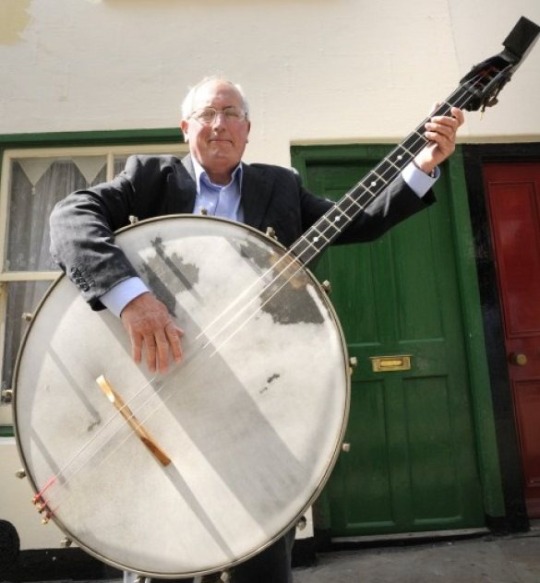
| US | Essentially in the same range as the bass banjo, but with a much larger resonator. These instruments are very rare, and tuning is not standardized. | [6][7] | |
| Banjo (5-string) | 5 strings 5 courses | Standard/common: G4 D3 G3 B3 D4 Alternates: | Bluegrass Banjo | US via Africa |
There are dozens of other, less common tunings. | |
| Banjolele | 4 strings 4 courses | Standard/common: G4 C4 E4 A4 Alternate (traditional):
Baritone
| Banjo ukulele, banjo uke, banjelele, banjulele | US | Hybrid of banjo and ukulele. Same tuning as a ukulele of the same scale. | |
| Banjolin | 4 strings 4 courses | G3 D4 A4 E5 | Mandolin-banjo, Melody Banjo, banjoline, bandoline | US | Hybrid of mandolin and banjo but with only one string per course | |
| Banjo, Long Neck | 5 strings 5 courses | E4 B2 E3 G3 B3 | "Pete Seeger" Banjo | US (commissioned by Pete Seeger) | Open string tuning; often played with capo on 3rd fret | |
| Banjo, tenor | 4 strings 4 courses | Standard/common (all fifths): C3 G3 D4 A4 Alternate:
| US via Africa | Irish tuning same as octave mandolin tuning | ||
| Banjo, Plectrum | 4 strings 4 courses | C3 G3 B3 D4 Chicago Tuning: D3 G3 B3 E4 | US via Africa | |||
| Baryton | 17 strings 17 courses Two ranks | Bowed rank: A1 D2 G3 C3 E3 A3 D4 Plucked rank: A2 D3 E3 F3 G3 A3 B3 C3 D4 E4 | Europe (Germany?) | Seven bowed strings, and 10 resonating strings, also plucked with the left thumb | ||
| Basprim | (See Brac, 5 string) | (See Brac, 5 string) | ||||
| Bass guitar | (See Guitar, bass) | (See Guitar, bass) | ||||
| Berimbau | 1 string 1 course | [*] | Brazil |
| ||
| Biscernica, 5 string | 5 strings 4 courses | C3•F3•B3•E4 E4 | Bisernica | Balkans | The prim has 5 strings; there is another bisernica which has 6 strings. | |
| Bisernica, 6 string | 6 strings 4 courses | E3•A3•D4 D4•G4 G4 | Tamburitza | Croatia, Serbia, Hungary, Slovenia | Other courses are sometimes doubled. | |
| Bordonua | 10 strings 5 courses | A2 A3•D4 D3•F3 F4•B3 B3•E4 E4 | Puerto Rico | |||
| Bouzouki | 8 strings 4 courses | C3 C4•F3 F4•A3 A3•D4 D4 | Tetrachordo bouzouki | Greece | Standard aka "F6 tuning" | |
| Bouzouki | 6 strings 3 courses | D3 D4•A3 A3•D4 D4 | Trichordo bouzouki | Greece | Standard aka "F6 tuning" | |
| Bouzouki, Irish | ( See Irish bouzouki ) | ( See Irish bouzouki ) | ||||
| Brac, 5 string | 5 strings 4 courses | Standard/common: E3•A3•D4•G4 G4 Alternate:
| Basprim, Brach | Croatia, Serbia, Slovenia | ||
| Brac, 6 string | 6 strings 4 courses | G3 G3•D4 D4•A4 A4 | Brach | Croatia, Serbia, Slovenia | ||
| Braguinha | 4 strings 4 courses | D4 G4 B4 D5 | Braguinã, Cavaquinho, Machete de braga | Madeira, Portugal | Standard aka "Banjo tuning" (octave higher than the plectrum banjo) | |
| Bugarija, 5 string | 5 strings 4 courses | Standard/common: G2•B2•D3•G3 G3 Alternates:
| Kontra | Croatia, Serbia, Slovenia | First course is sometimes not doubled. | |
| Bugarija, 6 string | 6 strings 4 courses | Standard/common: G2•B2•D3 D3•G3 G3 Alternates:
| Kontra | Croatia, Serbia, Slovenia |
C
| Instrument | Strings & Courses | Tuning(s) | Alternative Names | Origin | style="background: #7ad;" scope="col" width'"134" |Notes | Picture |
|---|---|---|---|---|---|---|
| Cak | 4 strings 3 courses | D5 D5 • G4 • B4 | Steel kroncong guitar | Indonesia | ||
| Cavaquinho | 4 strings 4 courses | Standard/common: D4 G4 B4 D5 Alternates:
| Cavaco, Manchete, Machimbo | Portugal | ||
| Cello | 4 strings 4 courses | Standard/common: C2 G2 D3 A3 Alternates:
| Violoncello | Europe | Many scordatura tunings have been employed by various composers for individual pieces, for example:
B1 F2 D3 A3
B1 F2 C3 G3 | |
| Celo | 4 strings | Celovic celloses ginga | Croatia Serbia Slovenia | This is the modern instrument | ||
| Čelovič, 4 string | 4 strings 4 courses | E2 A2 D3 G3 | Celo, Csello, Cselo | Croatia, Serbia, Slovenia | This is the modern instrument again | |
| Čelovič, Farkas | 6 strings 4 courses | D2•G2•C3 C3•G3 G3 | Celo, Csello, Cselo | Croatia, Serbia, Slovenia | The traditional 19th century instrument, developed by Jankovic Farkas, now virtually obsolete. | |
| Cetera | 16 strings 8 courses | Standard/common: C3 C3•D3 D3•E3 E3•F3 F3•G3 G3•G3 G3•D4 D4•G4 G4 Alternate:
G2 G2•A2 A2•C3 C3•D3 D3•A3 A3•G3 G3•D4 D4•E4 E4 | Corsica, France. | |||
| Chanzy | 3 strings 3 courses | Standard/common: F2 C3 F3 Alternates:
| Chanzi, Tyanzi | Tuva, Russia | ||
| Chapey | 3 strings 2 courses | F3 F3 • B3 | Chapei, Chapei Dong Veng | Cambodia | ||
| Chapman Stick | 10 strings 10 courses | E3 A2 D2 G1 C1 F2 B2 E3 A3 D4 | Stick, The Stick, Classic Stick | United States | There are many alternate tunings, which vary from individual to individual | |
| Chapman Stick, Grand Stick | 12 strings 12 courses | B3 E3 A2 D2 G1 C1 C2 F2 B2 E3 A3 D4 | Stick, The Stick, Grand Stick | United States | There are many alternates, which vary from individual to individual | |
| Charango | 10 strings 5 courses | Standard/common: G4 G4•C5 C5•E5 E4•A4 A4•E5 E5 Alternates:
C4 C4•F4 F4•A4 A3•D4 D4•A4 A4
F4 F4•B5 B5•C5 C4•G4 G4•D5 D5 | Quirquincho, Mulita, Tatu, Kirki | Bolivia, Peru, Argentina Chile, Ecuador | Common C6/Am7 or "Bolivian" tuning, but there are many variants. 3rd course is an octave pair. | |
| Charango, Hatun | 7 or 8 strings 6 or 7 courses | (A3) • D4 • G4 • C5 • E5 E4 • A4 • E5 | Grand Charango, Hatun Charango, Peruvian Charango | Peru | A recent addition to the charango family. | |
| Charangón | 10 strings 5 courses | Standard/common: D4 D4•G4 G4•B4 B3•E4 E4•B4 B4 Alternates:
G3 G3•C4 C4•E4 E3•A3 A3•E4 E4
G3 G2•C4 C3•E4 E3•A3 A3•E4 E4
C4 C4•F4 F4•A4 A3•D4 D4•A4 A4 | Tenor Charango, "Bass" Charango | Andean Region | Standard aka "Argentine tuning" or "G6 tuning", one fourth lower than the charango. Very similar in appearance to the charango, but slightly larger. | |
| Charango, Ranka | 11 strings 5 courses | G4 G4•C5 C5•E5 E4•A4 A4•E5 E5 E6•D4 D4•A4 A4•G5 G4•C5 C5•G5 G5 G6 | Patasi Charango, Ranqha Charango | Cochabamba, Bolivia | ||
| Chillador | 10 strings 5 courses | Standard/common: G3 G3•C4 C4•E4 E3•A3 A3•E4 E4 Alternates: Same as charango | Andean mountains | Essentially a flat-backed charango | ||
| Chitarra battente | 10 strings 5 courses | A3 A3•D4 D4•G3 G3•B3 B3•E4 E4 | Italy | |||
| Chonguri | 4 strings 4 courses | Standard/common: D2 F2 D3 A2 Alternate:[*]
| Chaghyr, Chagur, Chugur, Choghur, Chungur, Chunguri | Georgia | [*]There are many tuning variations. Note that both examples here are re-entrant. | |
| Çiftelia | 2 strings 2 courses | B3 E4 | Albania | Common tuning, there are variants. | ||
| Cimbalom | [*] about 125 strings about 53 courses | A2 A2 B2 C3 C3 D3 D3 E3 F3 F3 G3 G3 [...] * A5 B5 C6 C6 D6 D6 E6 F6 F6 G6 G6 A6 | Cimbál, cymbalom, cymbalum, ţambal, tsymbaly and tsimbl, santur, santouri, sandouri | Hungary |
| |
| Cinco Cuatro | 5 strings 4 courses | G3•D4 D3•F4•B4 | North-western Venezuela | |||
| Cinco Y Medio | 5 strings 5 courses | Standard/common: E4•G3•D4•F4•B4 Alternates:
A4•D3•F4•B4•E4 | North-western Venezuela | |||
| Cinco y Medio | 6 strings 6 courses | Standard/common: E3•A3•D3•F4•B4•E4 Alternate:
A4•A3•D3•F4•B4•E4 | North-western Venezuela | Standard a.k.a. "Sanara tuning" | ||
| Cinco Seis | ( See Seis Cinco ) | ( See Seis Cinco ) | ||||
| Cittern (long scale) | 10 strings 5 courses | Standard/common (aka "Irish"): D2 D2•G2 G2•D3 D3•A3 A3•D4 D4 Alternates:
C2 C2•G2 G2•D3 D3•A3 A3•D4 D4
C2 C2•G2 G2•D3 D3•A3 A3•E4 E4 | Celtic or Flatback Cittern | Europe | Long Scale[8] ~ 25.25" (64.1 cm) Many other modal tunings have been described for citterns. | |
| Cittern (mid scale) | 10 strings 5 courses | Standard/common: D2 D2•G2 G2•D3 D3•A3 A3•E4 E4 Alternates:
D2 D2•G2 G2•D3 D3•A3 A3•D4 D4
D2 D2•A2 A2•D3 D3•A3 A3•D4 D4 | Celtic or Flatback Cittern | Europe | Mid Scale[9] ~ 22.5" (57.2 cm) Many other modal tunings have been described for citterns. | |
| Cittern (short scale) | 10 strings 5 courses | Standard/common: G2 G2•D3 D3•A3 A3•D4 D4•A4 A4 Alternates:
G2 G2•D3 D3•G3 G3•D4 D4•G4 G4
G2 G2•D3 D3•A3 A3•E4 E4•B4 B4 | Celtic or Flatback Cittern | Europe | Short Scale[10] ~ 20.0" (51.0 cm) Many other modal tunings have been described for citterns. | |
| Crwth | 5 strings 5 courses | G2•C3•C2•D2•D3 | Crowd, Rote | Wales | Traditional Welsh tuning | |
| Cuatro Alto | 10 strings 5 courses | F4 F3•B3 B4•E4 E4•A4 A4•D5 D5 | Alto Cuatro | Puerto Rico | Rare.[11] | |
| Cuatro Antiguo | 8 strings 4 courses | A3 A3•E4 E4•A4 A4•D5 D5 | Puerto Rico | A 4 string/4 course version exists, tuned the same | ||
| Cuatro Bajo | 10 strings 5 courses | E3 E2•A3 A2•D3 D3•G3 G3•C4 C4 | Bass Cuatro | Puerto Rico | Rare.[12] | |
| Cuatro Cubano | 8 strings 4 courses | Standard/common: G4 G3•C4 C4•E4 E4•A4 A4 Alternates:
| Cuban Cuatro, Tres-Cuatro | Cuba | ||
| Cuatro, Puerto Rican | 10 strings 5 courses | B3 B2•E4 E3•A3 A3•D4 D4•G4 G4 | Cuatro Tradicional, Cuatro Tenor, Cuatro Puertorriqueno, Cuatro Aviolinado, Cuatro Moderno, tenor Cuatro | Puerto Rico | The Tenor Cuatro is the standard instrument of the Puerto Rican Cuatro Family.[13] Cuatro Aviolinado means 'violin-shaped cuatro'; Cuatro Moderno is to distinguish from the Cuatro Antiguo | |
| Cuatro, Venezuelan | 4 strings 4 courses | A3•D4•F4•B3 | Cuatro Venezolano | Venezuela | Standard aka "D6 tuning" | |
| Cuatro Soprano | 10 strings 5 courses | C5 C4•F4 F5•B4 B4•E5 E5•A5 A5 | Soprano Cuatro | Puerto Rico | Rare.[14] | |
| Cuk | 3 strings 3 courses | G4 • B3 • E3 | Kroncong Cuk, Nylon kroncong guitar | Indonesia | ||
| Cümbüş | 12 strings 6 courses | Standard/common: A2 A2•B2 B2•E3 E3•A3 A3•D4 D4•G4 G4 Alternates:
E2 E2•A2 A2•B2 B2•E3 E3•A3 A3•D4 D4 | Turkey | Tunings are highly variable, other common alternates include:
A2 A2•D3 D3•E3 E3•A3 A3•D4 D4•G4 G4 | ||
| Cümbüş, tambur | 6 strings 3 courses | D2 D2•A2 A2•D3 D3 | Turkey | |||
| Cura | 6 strings 3 courses | D4 D4•A4 A4•E5 E5 | Cura saz | Turkey | ||
| Cura | 7 strings 3 courses | G3 G3•D4 D4���A4 A4 A4 | Cura saz | Turkey | ||
| Cura | 8 strings 4 courses | G3 G3•D4 D4•A4 A4•E5 E5 | Cura saz | Turkey | Same as Mandolin |
D
| Instrument | Strings & Courses | Tuning(s) | Alternative Names | Origin | style="background: #7ad;" scope="col" width'"130" |Notes | Picture |
|---|---|---|---|---|---|---|
| Đàn bầu | 1 string/ 1 course | C3 [*] | Đàn độc huyền, Độc huyền cầm | Vietnam |
| |
| Đàn đáy | 3 strings 3 courses | G3•C4•F4 | Vo de cam, Đàn đáy | Vietnam | ||
| Đàn nguyệt | 2 strings 2 courses | [ * ] | Nguyệt cầm, Đàn kìm | Vietnam |
| |
| Đàn nhị | 2 strings 2 courses | Standard/common: F C Alternates:
| Đàn cò | Vietnam | ||
| Đàn tranh | 17 strings, 17 courses[*] | G3 A3 C4 D4 E4 G4 A4 C5 D5 E5 G5 A5 C6 D6 E6 G7 A7 | Vietnam |
| ||
| Daruan | 4 strings 4 courses | D2 A2 D3 A3' | Bass Ruan | China | lit. "large Ruan" | |
| Dihu | 2 strings 2 courses |
| Dadihu, Dahu, Ziaodihu, Zhongdihu | China | A larger version of the Erhu. Either tuning may be considered standard. | |
| Diyinruan | 4 strings 4 courses | G1 D2 G2 D3' | Contraass Ruan | China | lit. "low pitched Ruan" | |
| Dombra | 2 strings 2 courses | Standard: D4•G4 | Dambura, Dumbyra, Tumpyra, Tumra, Danbura | North central Asia | ||
| Domra, alto | 3 strings 3 courses | E3•A3•D4 | Russia | |||
| Domra, alto | 4 strings 4 courses | C3•G3•D4•A4 | Ukraine | Same as mandola tuning | ||
| Domra, bass | 3 strings 3 courses | E2•A2•D3 | Russia | |||
| Domra, bass | 4 strings 4 courses | C2•G2•D3•A3 | Ukraine | Same as mandocello tuning | ||
| Domra, contrabass | 3 strings 3 courses | Standard: E1•A1•D2 Alternate:
| Russia | |||
| Domra, contrabass | 4 strings 4 courses | E1•A1•D2•G2 | Ukraine | Same as the orchestral double bass | ||
| Domra, Mezzo-soprano | 3 strings 3 courses | B3•E4•A4 | Russia | Rare | ||
| Domra, piccolo | 3 strings 3 courses | B4•E5•A5 | Russia | |||
| Domra, piccolo | 4 strings 4 courses | C4•G4•D5•A5 | Ukraine | Octave higher than the mandola | ||
| Domra, prima | 3 strings 3 courses | E4•A4•D5 | Russia | The main instrument of the domra family | ||
| Domra, prima | 4 strings 4 courses | G3•D4•A4•E5 | Ukraine | Same as mandolin tuning | ||
| Domra, tenor | 3 strings 3 courses | B2•E3•A3 | Russia | |||
| Domra, tenor | 4 strings 4 courses | G2•D3•A3•E4 | Ukraine | Same as octave-mandolin tuning | ||
| Dotara | 4 strings 4 courses | F3•C3•F4•B4 | India | |||
| Dotara | 6 strings 5 courses | G2 G3•C4•G4•G4•C5 | Bangladesh | |||
| Double bass | 4 strings 4 courses | Standard/common: E1•A1•D2•G2 Alternates:
C1•A1•D2•G2
B0•A1•D2•G2 | Bass, bass fiddle, contrabass, string bass, standup bass, doghouse | Europe | Standard aka "orchestral tuning" | |
| Double bass, 5-string | 5 strings 5 courses | Standard/common: C1•E1•A1•D2•G2 Alternates:
B0•E1•A1•D2•G2 | Bass, bass fiddle, contrabass, string bass, standup bass, doghouse | Europe | Standard aka "orchestral tuning" | |
| Dranyen | 7 strings 3 courses | A3 A3•D4 D3 D3•G3 G3 | Dramyin, Dramnyen | Bhutan and Tibet | Standard aka "Bhutanese tuning" | |
| Dranyen | 6 strings 3 courses | A3 A3•D3 D3•G3 G3 | Dramyin, Dramnyen | Bhutan and Tibet | Standard aka "Tibetan tuning" | |
| Dulcimer, 3 course | 3–6 strings 3 courses | Standard/common:
Alternates (see notes):
| Mountain Dulcimer, Appalachian Dulcimer, Lap Dulcimer, Dulcimore, Delcimore, Delcimer | US |
| 3-course, 4-string dulcimer: |
| Dulcimer, 4 course | 4–8 strings 4 courses | Common*:
Alternates (see notes):
| Mountain Dulcimer, Appalachian Dulcimer, Lap Dulcimer, Dulcimore, Delcimore, Delcimer | US | ||
| Dutar | 2 strings 2 courses | Standard/common: D3•G3 Alternate:
| Dotar | Uzbekistan | This instrument is found in many forms throughout central Asia. |
E
| Instrument | Strings & Courses | Tuning(s) | Alternative Names | Origin | style="background: #7ad;" scope="col" width'"140" |Notes | Picture |
|---|---|---|---|---|---|---|
| Ektara | 1 string 1 course | No standard; string is tuned to any convenient pitch. | Ektar, Iktar, Gopichand, Gobijeu | India | ||
| Epinette des Vosges | 6 strings [*] 6 courses | Common: G C G | France | Typically three fretted strings; three drones, but the number of drones may vary widely. Similar in concept to the Apalacian Dulcimer | ||
| Erhu | 2 strings 2 courses | D4 A4 | Nanhu | China |
F
| Instrument | Strings & Courses | Tuning(s) | Alternative Names | Origin | style="background: #7ad;" scope="col" width'"130" |Notes | style="background: #7ad;" scope="col" width'"100" |Picture |
|---|---|---|---|---|---|---|
| Fegereng | 2 strings 2 courses | [*] | Faglong, Fuglung, Hegelong, Kutyapi, Kutiapi, Kotyapi, Kotapi, Kudyapi, Kuglong, Kadlong, Kudlong, Kudlung, Kusyapi | Southeast Asia | [*] There is no "standard" tuning. One string is tuned to any convenient pitch, and the other is tuned one octave higher. | |
| Fiddle | 4 strings 4 courses | Standard/common: G3 D4 A4 E5 Alternates:
| Violin, Kit, Pochette | Europe, USA | "Fiddle" describes a playing style more than a unique instrument; a fiddle is just a violin with a slightly different "set-up". Standard aka "Italian" or "orchestral" tuning, High Bass aka "Old-time D tuning", Cross tuning aka "High counter", Calico aka "Black Mountain Rag" or the Swedish tunings: Trollstämning, or Näckastämning |
G
| Instrument | Strings & Courses | Tuning(s) | Alternative Names | Origin | style="background: #7ad;" scope="col" width'"137" |Notes | style="background: #7ad;" #7ad;" scope="col" width'"80" |Picture |
|---|---|---|---|---|---|---|
| Gabusi | 6 strings 4 courses | D g bb dd | Gaboussi | Comoros Islands | ||
| Gadulka | 3 strings 3 courses | A3 E3 A4 | The Balkans | 3 playing strings, with up to 10 sympathetic strings. | ||
| Gambus Hadhramaut | 11 strings 6 courses | C • G G • B B • A A • E E • D D | Malaysia, Indonesia | Related to oud | ||
| Gaoyinruan | 4 strings 4 courses | G3 D4 G4 D5 | Soprano Ruan | China | Literally "high pitched Ruan" | |
| Gehu | 4 strings 4 courses | C2 G2 D3 A3 | Erhu-cello, | China | Same tunings as cello | |
| Gekkin | 4 strings 2 courses | C3 C3 G3 G3 [*] | Gekin | Japan |
| |
| Gekkin | 4 strings 4 courses | A3 D4 D4 D5 | Japanese Yueqin | Japan | ||
| Geyerleier | 8 strings 4 courses | Standard/common: E3 E2•B3 B2•E3 E3•B3 B3 Alternate:
| Hamburg, Germany | |||
| Guitalele | 6 strings 6 courses | Standard/common: A2 D3 G3 C4 E4 A4 Alternate:
| Ukutar | US, Japan | Tuned a 4th or a 5th higher than the standard guitar. | |
| Guitar | 6 strings 6 courses | Standard: E2 A2 D3 G3 B3 E4 Common Alternates:
| Classical guitar, 6-string guitar, Spanish guitar, Steel-string guitar | Spain (acoustic) USA (electric) | "classical" = guitar with gut, nylon, or other synthetic strings; "acoustic"/"steel-string" = guitar with metal strings; Open G aka "bottleneck," "taro patch"; Open A aka "Spanish"; "Lute tuning" is usually capoed on 3rd fret to give G2 C3 F3 A3 D4 G4, and E2 is often dropped to D2 (F2 with capo). There are hundreds of alternate guitar tunings; whole books have been written on the subject.[16] | Classical Guitar: Steel String Guitar: Electric Guitar: |
| Guitar, alto | 11 strings 11 courses | B1 C2 D2 E2 F2 G2 C3 F3 B3 D4 G4 | Archguitar, altgitarren, Bolin guitar | Sweden | ||
| Guitar, alto | 13 strings 13 courses | A1 B1 C2 D2 E2 F2 G2 A2 D3 F3 A3 D4 F4 | Archguitar, altgitarren, Bolin guitar | Sweden | This instrument is very rare. | |
| Guitar, alto (Niibori) | 6 strings 6 courses | Standard/common: B2 E3 A3 D4 F4 B4 | G Guitar | Japan | Transposing guitar in the key of G, developed for the Niibori Guitar Orchestra | |
| Guitar, 7 string | 7 strings 7 courses | Standard/common: B1 E2 A2 D3 G3 B3 E4 Alternate:
| 7 string classical guitar, "Brazilian" guitar, 7 string electric guitar | US | Van Eps aka "Jazz tuning" "Choro" is popular in Brazil 6-string alternates may be adapted for the 7-string | |
| Guitar, 8 string (low/high) | 8 strings 8 courses | B1 E2 A2 D3 G3 B3 E4 A4 | 8 string classical guitar | Spain | aka "Galbraith tuning" | |
| Guitar, 8 string (added basses) | 8 strings 8 courses | [B1 D2] E2 A2 D3 G3 B3 E4 | 8 string classical guitar 8 string electric guitar | Spain | Tuning of two lowest strings varies with player and music | |
| Guitar, 9 string | 9 strings 6 courses | E3 E2•A3 A2•D4 D3•G3 B3 E4 | US | 12-string guitar variant with doubled bases | ||
| Guitar, 9 string | 9 strings 6 courses | E2• A2• D3• G4 G3•B3 B3•E4 E4 | US | 12-string guitar variant with doubled trebles | ||
| Guitar, 9 string | 9 strings 9 courses | F1 B1 E2 A2 D3 G3 B3 E4 A4 [*] | US |
| ||
| Guitar, 10 string | 10 strings 10 courses | F2 G2 A2 C2 E2 A2 D3 G3 B3 E4 | 10 String classical guitar | Spain | Standard tuning, developed by luthier José Ramírez III in collaboration with guitarist Narciso Yepes | |
| Twelve-string guitar, 12 string | 12 strings 6 courses | Standard/common: E3 E2•A3 A2•D4 D3•G4 G3•B3 B3•E4 E4 Alternates:
All 6-string alternates may be adapted to 12-string. | Twelve-stringed Guitar | US? | Some players tune the third course to unison G3's to minimize breakage of the high G string. | |
| Guitar, baritone | 6 strings 6 courses | Common tunings:
| US | There really is no "standard" tuning for baritone guitar; choice of tuning depends on instrument, stringing, and player's preferences. | ||
| Guitar, bass | 4 strings 4 courses | Standard/common: E1 A1 D2 G2 Alternates:
| Bass, electric bass, 4-string bass, Fender bass | USA | First U.S. patent filed by Leo Fender on November 21, 1952. | Electric Bass: Acoustic Bass: |
| Guitar, bass (5-string) | 5 strings 5 courses | Standard/common:
| Bass, electric bass, 5-string bass | Essentially a 4-string bass with one added high or low string. Choice of tuning depends whether the added string is low or high. | ||
| Guitar, bass (6-string) | 6 strings 6 courses | Standard/common: B0 E1 A1 D2 G2 C3 Alternate: E1 A1 D2 G2 B2 E3 | Bass, electric bass, 6-string bass, contrabass guitar | Essentially a 4-string bass with either added high and low strings. | ||
| Guitar, bass (8-string) | 8 strings 4 courses | E2 E1•A2 A1•D3 D2•G3 G2 | Eight-string bass guitar, 8-string bass | US | Essentially a 4-string bass with each string doubled at the upper octave. | |
| Guitar, bass (12-string) | 12 strings 4 courses | E2 E2 E1•A2 A2 A1•D3 D3 D2•G3 G3 G2 | Twelve-string bass guitar, 12-string bass | US | Similar to an 8-string bass with doubled upper octaves. | |
| Guitar, octave | 6 strings 6 courses | E3•A3•D4•G4•B4•E5 | Piccolo Guitar, Soprano Guitar | Germany | One octave higher than the standard guitar. | |
| Guitarra De Golpe | 5 strings 5 courses | Standard/common: D3•G3•C4•E3•A3 Alternates:
| Guitarra Colorada, Quinta De Golpe, Mariachera | Mexico | Note re-entrant tunings | |
| Lute guitar | 6 strings 6 courses | Standard/common: E2•A2•D3•G3•B3•E4 Alternates are the same as the guitar | Guitarren laute, guitar-lute, lute-guitar | Germany | Basically this is a lute-shaped guitar; a guitar neck on a lute body. | |
| Guitarro | 6 strings 6 courses | B4 F4 D5 A5 E5 | Guitarrico, Spanish Tiple | Spain | ||
| Guitarrón | 6 strings 6 courses | A1 D2 G2 C3 E3 A2 | Guitarrón de Toloche | Mexico | ||
| Guitarron Argentino | 6 strings 6courses | B1 E2 A2 D3 G3 B3 | Argentina | A 6-string acoustic bass guitar. | ||
| Guitarrón chileno | 24 or 25 strings total 5 courses + 4 open "diablitos" | diablitos, top: F5 A4 (D4) D4 D3 D3 D2 • (G4) G4 G4 G4 G3 G3 • (C4) C4 C4 C3 C2 • E4 E4 E4 • A4 A4 A4 diablitos, bottom: G4 B4 | Chile | 4 short, unfretted strings are known as diablitos (little devils). Number of strings in 3rd, 4th, & 5th courses may vary. | ||
| Guitar, tenor | 4 strings 4 courses | Standard C3 • G3 • D4 • A4 Common Alternates
| US | Same tuning as tenor banjo, mandola. | ||
| Guitar, terz | 6 strings 6 courses | G2 C3 F3 B3 D4 G4 | Tertz Guitar, Tierce Guitar, Third Guitar | Italy, Germany | A minor third higher than standard guitar tuning. | |
| Guqin | 7 strings 7 courses | sol la do re mi sol la | China | Guqin music uses no absolute pitch so tuning varies. The common Zheng Diao tuning sets "do" to approx. "F3" and tunes other strings relative to that to give C3 D3 F3 G3 A3 C4 D4 | ||
| Gusli | 9 strings 9 courses | Standard/common: E3 A3 B3 C4 D4 E4 F4 G4 A4 | Krylovidnye gusli | Russia | Tuning varies; this is a common traditional tuning |
H
| Instrument | Strings & Courses | Tuning(s) | Alternative Names | Origin | style="background: #7ad;" scope="col" width'"150" |Notes | Picture |
|---|---|---|---|---|---|---|
| Halszither | 9 strings 5 courses | G2 • D3 D3 • G3 G3 • B3 B3 • D4 D4 | Krienser Halszither | Switzerland | ||
| Hardingfele | 4 strings 4 courses plus 4–5 resonating strings | Standard/common: A3 D4 A4 E5 res. strings: (B3) D4 E4 F4 A4 Common alternates:
res.: (A3) D4 E4 G4 A4
res.: (B3) D4 E4 F4 A4
res.: (A3) C4 E4 F4 A4
res.: (A3) C4 E4 F4 A4
res.: (F3) B3 D4 G4 A4
res.: (B3) D4 E4 G4 A4 | Hardanger violin, Hardanger fiddle | Norway |
"Devil's Tuning"
There are many other variant tunings, most of them uncommon. | |
| Harp, Concert | 47 strings 47 courses | C1 D1 E1 F1 G1 A1 B1 [ . . . ] * C7 D7 E7 F7 G7 | Pedal Harp, Double-action Harp, Diatonic Double-action Harp | France |
| |
| Harp, Celtic | 34 strings 34 courses[*] | C2 D2 E2 F2 G2 A2 B2 [ . . . ] * C6 D6 E6 F6 G6 A6 | Clàrsach, Folk Harp, Lever Harp | British Isles |
| |
| Harpsichord | Varies[*] | [*]Typical: C2 C2 D2 D2 E2 F2 F2 G2 G2 A2 A2 B2 [...] * C6 D6 D6 E6 F6 F6 G6 G6 A6 A6 B6 C7 | Virginal, Spinet, Clavicytherium, Ottavino, Pedal Harpsichord, et al | Europe (Belgium?) | Many variants exist having differing number of keys, multiple keyboards, pedal boards, choirs of strings, etc., and they may have anywhere from about 120 to many hundreds of strings. Tuning is given for a typical single-keyboard, 5-octave instrument, for the main choir of strings. Only lowest and highest octaves are shown; intervening notes are tuned chromatically. Often tuning is in some musical temperament other than 12-tone equal temperament (common on modern pianos). | |
| Harzither | 8 strings 4 courses | GG • CC • EE • GG | Bergzither | Germany | ||
| Huapanguera | 8 strings 5 courses | G2 •D3 D4•G3 G3•B3 B3•E3 | Mexico | |||
| Huobosi | 4 strings 4 courses | E2 A2 D3 G3 | Hubo, Sugudu | China | ||
| Hurdy Gurdy | 5 or 6 strings 5 courses | Traditional: (G4)G4 C4 G3 C3 C2 Alternates:
(G4)G4 C4 G3 C3 G2
(D5)D4 D4 G3 D3 D2
(D5)D4 D4 A3 D3 G2
(A5)A5 D4 A3 D3 D2 | Beggar's lyre, Crank lyre, Cymphan, Forgolant, Organistrum, Symphonia, Wheel fiddle, Wheel vielle | France | Stringing is given in reverse order, owing to the orientation of the instrument while playing. The first one (or two) strings are melody strings; others are drone strings. Other regional tuning variants exist. |
I
| Instrument | Strings & Courses | Tuning(s) | Alternative Names | Origin | style="background: #7ad;" scope="col" width'"140" |Notes | Picture |
|---|---|---|---|---|---|---|
| Ichigenkin | 1 string 1 course | no standard [*] | Japan | [*] string is tuned to any note convenient for the vocalist | ||
| Igil | 2 strings 2 courses | (E • B) | Ikili | Tuva, Mongolia | Pitch varies depending what other instruments the Igil is playing with, but the two strings are always tuned a 5th apart. | |
| Irish bouzouki | 8 strings 4 courses | Standard/common: G3 G2•D4 D3•A3 A3•E4 E4 Alternates:
G2 G2•D3 D3•A3 A3•E4 E4
G3 G2•D4 D3•A3 A3•D4 D4
A3 A2•D4 D3•A3 A3•D4 D4 | Bouzouki, Octave Mandolin, tenor Mandolin (US), tenor Mandola (UK), Zouk | Ireland | Irish bouzouki is an octave mandolin with the two lowest courses tuned in octaves instead of unisons. "Modal D" octaves can also be tuned in unisons. |
J
| Instrument | Strings & Courses | Tuning(s) | Alternative Names | Origin | style="background: #7ad;" scope="col" width'"140" |Notes | Picture |
|---|---|---|---|---|---|---|
| Jarana huasteca | 5 strings 5 courses | G3 • B3 • D4 • F4 • A4 | Mexico | |||
| Jarana jarocha | 8 strings 5 courses |
A3 • D4 D4 • G3 G4 • B3 B3 • E4
G3•C4 C4•E3 E3•A3 A3•G4 | Mexico | Part of their name usually describes their size, for example: Jarana Chaquiste, Jarana Primera, Jarana Segunda, Jarana Tercera, Jarana Tercerola Where octave doublings occur will often differ depending on the size of the instrument. The larger instruments commonly double the middle courses at the octave. | ||
| Jarana jarocha requinto | 4 strings 4 courses | Standard/common: G2•A2•D2•G3 Alternates:
| Jarocha requinto, requinto jarocha, guitarra de son | Mexico | ||
| Jarana leona | 4 strings 4 courses | G2•A2•D3•G3 | Mexico | |||
| Jouhikko | 3 strings 3 courses | D A E | Jouhikannel | Finland | Absolute pitch is not fixed on this instrument |
K
| Instrument | Strings & Courses | Tuning(s) | Alternative Names | Origin | style="background: #7ad;" scope="col" width'"94" |Notes | Picture |
|---|---|---|---|---|---|---|
| Kabosy | 6 strings 4 courses | G • G • B B • D D | Madagascar | |||
| Kacapi | 6 strings 3 courses | A• B •C •F• F | Indonesia | Uses a gamelan pelog scale. Tuning is approximated to western notation. | ||
| Kamancheh | 4 strings 4 courses | D5•A5•D4•A4 | Iran, Armenia, Azerbaijan, Uzbekistan, Turkmenistan | |||
| Khonkhota | 8 strings 5 courses [*] | G4 G3•C4•D4 D3•A3•D4 D4 | Qonqhota, Ponputu, Mokholos, Machus | South America | Strings/courses are usually 8/5 but 7/5, 9/5, 10/5 or 11/5 variations exist. | |
| Kithara Sarda | 6 strings 6 courses | B2 E2 A2 D3 F3 B3 | Sardinia, Italy | |||
| Kobza | 8 strings 4 courses | Standard/common: GG • DD • GG • CC Alternate: DD • AA • DD • GG | Kobuz, Kobsa | Moldavia, Romania, Hungary | ||
| Kokles | 11 strings 11 courses | G3 A3 C3 D3 E3 F3 G4 A4 B4 C4 G3 A3 C3 D3 E3 F3 G4 A4 B♭4 C4 | Kokle, Kūkles, Kūkle | Latvia | Since the 1980s the most common tunings for 11-stringed kokles among kokles players. | |
| Komuz | 3 strings 3 courses | A E A | Qomuz, Gopuz, Kopuz, Kopus | Kyrgyzstan | ||
| Kora | 21 strings 21 courses | Traditional tunings:
| West Africa | Scales roughly correspond to Western major, minor, and lydian scales, but are not in equal temperament. Any of the scales may be considered "standard". | ||
| Koto | 13 strings 13 courses | Traditional tunings:
D4 D4 A3 B3 D4 E4 F4 A4 B4 D5 E5 F5 A5
E4 A3 B3 D4 E3 F3 A3 B3 C4 E4 F4 A4 B4
E4 A3 B3 C4 E3 F3 A3 B3 C4 E4 F4 A4 B4
B3 E3 F3 A3 B3 C4/D4 E4 F4 A4 B4 C5/D5 E5 F5
B3 E3 F3 G3 B3 C4 E4 F4 G4 B4 C4 E4 F4
F3 B3 C3 E3 F3 G3/A3 B3 C4 E4 F4 G4/A4 B4 C5
G3 G3 D3 E3 G3 A3 B3 D4 E4 G4 A4 B4 D5 | 箏, 琴 | Japan |
| |
| Krachappi | 4 strings 2 courses | F2 F2 • B2 B2 | Grajappi, Krachap pi | Thailand | ||
| Kwitra | 8 strings 4 courses | GG • EE • AA • DD | Kuitra, Kouitra, Quwaytara | Algeria |
L
| Instrument | Strings & Courses | Tuning(s) | Alternative Names | Origin | style="background: #7ad;" scope="col" width'"95" |Notes | Picture |
|---|---|---|---|---|---|---|
| Laouto | 8 strings 4 courses | Standard/common: C2 C3•G2 G3•D2 D3•A3 A3 Alternate:
| Laghouto | Greece | Standard a.k.a. "Mainland" | |
| Laúd | 12 strings 6 courses | Standard/common: G2 G2•C3 C3•F3 F3•B3 B3•E4 E4•A4 A4 Alternates:
D2 D2•A2 A2•E3 E3•B3 B3•F4 F4•C5 C5
D2 D2•A2 A2•E3 E3•B3 B3•F4 F4•D5 D5 | Spanish laud | Spain | Standard aka Spanish Tuning; one octave lower than the Spanish Bandurria | |
| Laúd, Cuban | 12 strings 6 courses | D3 D3•F3 F3•B3 B3•E4 E4•A4 A4•D5 D5 | Laud Cubano | Cuba | ||
| Laúd, Philippine | 14 strings 6 courses | F2•B2 B2•E3 E3•A3 A3 A3•D4 D4 D4•G4 G4 G4 | Laud | Philippines | Same tuning as the Octavina | |
| Lili'u | 6 strings 4 courses | G4 • C3 C4 • E4 • A3 A4 | 6 string Tenor Ukulele | Hawaii | Invented by Sam Kamaka to celebrate the 50th anniversary of Hawaii's Statehood. The name comes from the last queen of Hawaii, Queen Liliʻuokalani | |
| Liuqin | 4 strings 4 courses | G3 • D4 • G4 • D5 Alternate
| Liuyeqin, willow leaf instrument | China | ||
| Liuto cantabile | 10 strings 5 courses | C2 C2•G2 G2•D3 D3•A3 A3•E4 E4 | Liuto moderno | Naples, Italy | Some courses are occasionally single-strung | |
| Luc huyen cam | 5 strings 5 courses | Standard/common: C3 • F3 • C4 • G4 • C5 Alternate:
(a.k.a. "slide guitar tuning") | Đàn Ghita, Ghita, Phím Lõm, Vietnamese guitar | Vietnam | Originally a 4- or 5-string instrument; today often nearly identical to a 6-string western guitar, except for having a scalloped fingerboard and one less string. (See below.) | |
| Luc huyen cam | 6 strings 6 courses | Standard/common: E2 • A2 • D3 • G3 • B3 • E4 Alternates:
| Đàn Ghita, Ghita, Phím Lõm, Vietnamese guitar | Vietnam |
| |
| Lute | [ * ] |
G2 G2 • C3 C3 • F3 F3 • A3 A3 • D4 D4 • G4 G4
D2 D3•G2 G3•C3 C4•F3 F3•A3 A3•D4 D4•G4
D2 D3•F2 F3•G2 G3•C3 C4•F3 F3•A3 A3•D4 D4•G4
C2 C3•D2 D3•E♭2 E♭3•F2 F3•G2 G3•C3 C4•F3 F3•A3 A3•D4 D4•G4
A1 A2•B1 B2•C2 C3•D2 D3•E2 E3•F2 F3•G2 G3•A2 A2•D3 D3•F3 F3•A3 A3•D4•F4 | Europe | [ * ] The number of strings and courses on a lute can vary widely depending on period and geographical region. Among the more common forms are 6, 7, 8, 10, and 13 courses. (Pictured: 8 course Renaissance Lute.) | ||
| Cretan lyra | 3 strings 3 courses | D3 • A3 • E4 | Crete, Greece |
M
| Instrument | Strings & Courses | Tuning(s) | Alternative Names | Origin | style="background: #7ad;" scope="col" width'"140" |Notes | Picture |
|---|---|---|---|---|---|---|
| Mandobass | 4 strings 4 courses | Standard/common: E1 A1 D2 G2 Alternate: G1 D2 A2 E3 Alternate: C1 G1 D2 A2 | Bass Mandolin | Europe | The alternate tuning (2 octaves below the mandolin) is usually applied to a smaller-scale instrument (see Mandobass). The alternate tuning (2 octaves below the mandola) is usually applied to a smaller-scale instrument (see Mandobass). | |
| Mandobass | 8 strings 4 courses | Standard/common: G1 G1•D2 D2•A2 A2•E3 E3 Alternate:
| Tremolo-bass | Europe | Relatively rare; larger than the standard mandobass. Standard tuning is 2 octaves below the mandolin. Alternate tuning is 2 octaves below the mandola. | |
| Mandocello | 8 strings 4 courses | C2 C2•G2 G2•D3 D3•A3 A3 | Mandolincello, mandoloncello | Standard tuning is 1 octave below the mandola. | ||
| Mandola | 8 strings 4 courses | C3 C3•G3 G3•D4 D4•A4 A4 | Tenor mandola (Europe) | A 5th below mandolin tuning. | ||
| Mandolin | 8 strings 4 courses | G3 G3•D4 D4•A4 A4•E5 E5 Alternates: "Get Up John Tuning": F3 A3•D4 D4•A4 A4•A5 D5 All violin alternate tunings may be adapted for the mandolin | Standard instrument of the mandolin family. | |||
| Mandolinetto | 8 strings 4 courses | G3 G3•D4 D4•A4 A4•E5 E5 | USA and Canada | A guitar-shaped mandolin, or mandolin neck on ukulele body. | ||
| Mandolin, Octave | 8 strings 4 courses | Standard/common: G2 G2•D3 D3•A3 A3•E4 E4 Alternate:
G2 G2•D3 D3•A3 A3•D4 D4 | Tenor Mandolin, Irish Bouzouki, Octave mandola (Europe) | Pitched 1 octave below the mandolin. | ||
| Mandolin, piccolo | 8 strings 4 courses | C4 C4•G4 G4•D5 D5•A5 A5 | Brilliant tone mandolin | Tuned a 4th above the mandolin; 1 octave above the mandola. | ||
| Mandriola | 12 strings 4 courses | G3 G3 G3•D4 D4 D4•A4 A4 A4•E5 E5 E5 | Tricordia | Europe | Tricordia is also a similar instrument tuned differently; both instruments are known by both names. (see Trichordia) | |
| Manguerito | 7 strings 5 courses | D4•G4•B4 B3•E4•B4 B4 | La Paz, Bolivia | |||
| Mejorana | 5 strings 5 courses |
D4•A4•A3•B3•E4
D4•G4•G3•B3•E4 | Mejorana, Rumbo | Panama | Either tuning may be considered "standard." |
N
| Instrument | Strings & Courses | Tuning(s) | Alternative Names | Origin | style="background: #7ad;" scope="col" width'"140" |Notes | Picture |
|---|---|---|---|---|---|---|
| Nevoud | 11 strings 6 courses | C2•F2 F2•B2 B2•E3 E3•A3 A3•D4 D4 | Nevud, New Oud | Turkey | ||
| Nigenkin | 2 strings 2 courses | No standard [*] | Yakumogoto | Japan | [*] Strings are tuned in unison, to any pitch convenient for vocalist. | |
| Nyckelharpa, standard | 4 strings 4 courses + 12 resonating strings | C3 • G3 • C4 • A4 res.strings: G3 A3 B3 B3 C4 C4 D4 E4 E4 F4 F4 G4 | Key-harp, Chromatic Nyckelharpa | Sweden | Number of sympathetic strings may vary. | |
| Nyckelharpa, tenor | 4 strings 4 courses + 12 resonating strings | G2 • D3 • G3 • E4 res.strings: G2 A2 B2 B2 C3 C3 D3 E3 E3 F3 F3 G3 | Sweden | This instrument is of very recent invention. |
O
| Instrument | Strings & Courses | Tuning(s) | Alternative Names | Origin | style="background: #7ad;" scope="col" width'"140" |Notes | Picture |
|---|---|---|---|---|---|---|
| Octavina | 14 strings 6 courses | F1•B1 B1•E2 E2•A2 A2 A2•D3 D3 D3•G3 G3 G3 | Philippine Laúd | Philippines | One octave lower than the Philippine Bandurria | |
| Octobass | 3 strings 3 courses | Berlioz/Musée de la Musique: C1 G1 C2
| Subcontrabass, triple bass | France | Extremely rare. Extant instruments tuned variously. | |
| Octofone | 8 strings 4 courses |
| USA | Any of the tunings may be considered "standard". | ||
| Oud | 11 strings 6 courses |
C2 F2 A2 D3 G3 C4
F2 A2 D3 G3 C4 F4
D2 G2 A2 D3 G3 C4
E2 A2 B2 E3 A3 D4
C2 F2 B2 E3 A3 D4
D2 F2 B2 E3 A3 D4 | Ud, Al-Ud, Oud Arbi | Middle East | notated a 4th higher in ME notation; one octave higher in western notation. |
P
| Instrument | Strings & Courses | Tuning(s) | Alternative Names | Origin | style="background: #7ad;" scope="col" width'"104" |Notes | Picture |
|---|---|---|---|---|---|---|
| Palida | 4 strings 4 courses | D3 • A3 • E4 • B4 | Europe | |||
| Panduri | 3 strings 3 courses | Standard/common: G3 • A3 • C4 Alternate:
| Phanduri | Georgia (Asia) | ||
| Pardessus de Viole | 5 strings 5 courses | Standard: C4 • E4 • A4 • D5 • G5 | Soprano Viol | Europe | A member of the viol family. A rare 6-string version adds a G3 below the low C string. | |
| Pedal Steel Guitar | [ * ] 10 strings 10 courses | Standard/common:
Alternates:
| Steel guitar | United States | [ * ] 10 strings is more or less standard now, but instruments with 6, 8, 12, and other numbers of strings, and 2, 3, or 4 necks exist. A different tuning is usually applied to each neck, but setups vary from player to player. | 2-Neck Pedal Steel Guitar |
| Phin | 3 strings 3 courses | A3 E4 A4 | Thailand | |||
| Piano | 230 strings[*] 88 courses | A0 A0 B0 C1 C1 D1 D1 E1 F1 F1 G1 G1 [...] *C7 D7 D7 E7 F7 F7 G7 G7 A7 A7 B7 C8 | Pianoforte, Grand, Grand Piano, Concert Grand, Upright, Upright Piano, Spinet | Europe (Italy) |
| Upright Piano: Grand Piano: |
| Piano, Imperial Grand | 249 strings[*] 97 courses | C0 C0 D0 D0 E0 F0 F0 G0 G0 A0 A0 B0 [...] *C7 D7 D7 E7 F7 F7 G7 G7 A7 A7 B7 C8 | Imperial Grand, 290, Bösendorfer | Austria |
| |
| Pipa | 4 strings 4 courses | A2 D3 E3 A3 | Pi p'a | China | ||
| Portuguese guitar | 12 strings 6 courses |
D3 D2•A3 A2•B3 B2•E3 E3•A3 A3•B3 B3
C3 C2 • G3 G2 • A3 A2 • D3 D3 • G3 G3 • A3 A3 | Guitarra Portuguesa | Portugal | Either tuning may be considered "standard". | |
| Prim | (See Bisernica, 5 string) | (See Bisernica, 5 string) |
Q
| Instrument | Strings & Courses | Tuning(s) | Alternative Names | Origin | style="background: #7ad;" scope="col" width'"140" |Notes | Picture |
|---|---|---|---|---|---|---|
| Qanbūs | 7 stings 4 courses | C • D D • G G • C C | Gambus | Yemen | ||
| Qinqin | 3 strings 3 courses | G3 D4 A5 | China |
R
| Instrument | Strings & Courses | Tuning(s) | Alternative Names | Origin | style="background: #7ad;" scope="col" width'"140" |Notes | Picture |
|---|---|---|---|---|---|---|
| Rajao | 6 strings 5 courses | D4•G4•C4•E4•A4 (A4) | Rajão | Portugal | Sometimes the top course is not doubled, so there are only 5 strings | |
| Ramkie | 4 strings 4 courses | C3 F3 A3 C4 | Afri-can, Kitaar | South Africa | Typically these are homemade, and therefore quite variable. | |
| Rebab | 2 strings 2 courses | D3 A3 [*] | Java |
| ||
| Requinto | 6 strings 6 courses | A2 D3 G3 C4 E4 A4 | Requinto guitar | Mexico | 4th above the standard guitar | |
| Ronroco | 10 strings 5 courses | Standard Argentine (G6/Em7): D4 D4•G4 G4•B4 B3•E4 E4•B4 B4 Standard Bolivian (F6/Dm7): C4 C4•F4 F4•A4 A3•D4 D4•A4 A4 Standard Chilean (C6/Am7): G3 G3•C4 C4•E4 E3•A3 A3•E4 E4 Common Variants: [*]
| Baritone Charango, Ronrroco | Andean Region | [*] Instrument is still new enough that no one "standard" tuning has emerged. Chilean tuning (also a variant in Bolivia), one octave below the charango, is very common. Chilan variants (various octave doublings on courses 3, 4, and 5) depend on stringing—thinner strings are required for the high octaves in doubled courses. Argentine G6/Em7 tuning is also popular, which basically raises the pitch to that of the charangón. | |
| Ruan | See under individual sizes | Ruanqin | See listing for individual sizes:
| See under individual sizes | ||
| Ruanqin | See Ruan | See Ruan | ||||
| Russian guitar | 7 strings 7 courses | Standard/common: D2 G2 B2 D3 G3 B3 D4 Alternates:
| Semistrunnaya gitara, semistrunka | Russia | There are many variant tunings, mostly idiosyncratic to individual performers. |
S
| Instrument | Strings & Courses | Tuning(s) | Alternative Names | Origin | style="background: #7ad;" scope="col" width'"140" |Notes | Picture |
|---|---|---|---|---|---|---|
| Samica | 4 strings 2 courses | Standard/common: B3 • E4 Alternate: A3 • D4 | Dangubica, tambura | Balkans | Tuning is flexible, but the courses are always a fourth apart. | |
| Sanshin | 3 strings 3 courses | Standard/common: C3 • F3 • C4 Alternates:
| Okinawa shamisen, jabisen | Ryukyu Islands, Japan | Standard aka Hon chōshi | |
| Santur | 72 strings 18 courses | Golden strings (right) E3•F3•G3•A3•B3•C4•D4•E4•F4 Silver strings (left) E4•F4•G4•A4•B4•C5•D5•E5•F5 Silver strings (behind bridges) E5•F5•G5•A5•B5•C6•D6•E6•F6 | Iran, Turkey | This is common tuning for Dastgāh-e Šur | ||
| Sanxian | 3 strings 3 courses | Standard/common: A2 • D3 • A3 Alternate: D3 A3 D4 | Sanhsien, Small Sanxian, Xianzi, Quxian, Shuxian, Chinese Banjo | China | ||
| Sanxian, Large | 3 strings 3 courses | G2 • D3 • G3 | Sanhsien, Large Sanxian, Xianzi, Quxian, Shuxian, Chinese Banjo | China | Other size variants exist, but are uncommon. | |
| Sarangi, Nepalese | 4 strings 4 courses | G4•C5•C5•G5 | Nepal | |||
| Sargija | 6 strings 3 courses | C3 C3 • G3 G3 • D3 D3 | Sharkia, Sharki, Shargija | Albania | ||
| Seis Cinco | 6 strings 5 courses | E3•A4 A3•D3•F4•B4 | Seis Cinco | North-western Venezuela | ||
| Setar | 4 strings 3 courses | C3 C4 • G3 • C4 | Iran | |||
| Shamisen | 3 strings 3 courses | Standard/common: D G D Alternates:
| Samisen, Sangen | Japan | Standard = "Honchoshi" tuning | |
| Sitar | 7 strings (3 are drones) plus 13 sympathetic strings | C2 G2 C3 F3 drones: C5 C4 G3 | North India | 4th string can be tuned to C. Sympathetic (resonating) strings are tuned to the raga being played. | ||
| Socavon | 4 strings 4 courses | G3 D4 A4 B2 | Bocona | Panama | ||
| Strumstick | 3 strings 3 courses | Standard/common: G3 D4 G4 Alternate:
| Dulcitar, Dulcimer stick, Strumbly, Standard Strumstick | US | Other sizes exist. General tuning is Root-5th-Octave, but the variations used are endless. | |
| Swedish lute (modern) | [*] | Standard / Common (12 strings / 12 courses):
F1 G1 A1 B1 C2 D2 open Open A / Sittra (15 strings / 15 courses): A1, B1, C#2, D2, E2, F#2, G#2 open | Scholander lute | Sweden | Other versions exist, mainly differing in the number of bass strings. Open A was developed in 1793-1794 for the original, most developed form (taken from a cittern).[18] |
T
| Instrument | Strings & Courses | Tuning(s) | Alternative Names | Origin | style="background: #7ad;" scope="col" width'"140" |Notes | Picture |
|---|---|---|---|---|---|---|
| Tambura | 8 strings 4 courses | D3 D3 • G3 G3 • B3 B3 • E4 E4 | Tamboura | Bulgaria | ||
| Tambura | 4 strings 4 courses | sol do' do' do* | Tanpura, Tampuri, Tamboura, Taanpura | India |
| |
| Tambura | 4 strings 2 courses | D D • A A | Tamboura | Macedonia | ||
| Tar | 6 strings 3 courses | Common (for Dastgāh-e Šur) C4 C4 • G3 G3 • C4 • C3 | Iran | |||
| Tarica | 5 strings 3 courses | Standard/common: C2 • G2 G2 • C3 C3 Alternate:
| Tarika, Tricord, Trichord | Europe | ||
| Taropatch | 8 strings 4 courses | Standard: G3 G4 • C3 C4 • E4 E4 • A4 A4 Alternates:
G4 G4 • C3 C3 • E4 E4 • A4 A4
G3 G3 • C3 C3 • E4 E4 • A4 A4 | 8 string Tenor Ukulele | Hawaii | The name comes from "Taropatch Fiddle" an early Hawaiian, slightly derogatory name for all Ukuleles used by the "Landed" Anglo Settlers however it came over to Mainland U.S.A. with the fiddle part dropped to describe an 8 string Ukulele | |
| Tembor | 5 strings 3 courses | A A•D•G G | China | |||
| Terzin Kitarra | 6 strings 6 courses | G2 B2 E3 A3 C4 E4 | Malta | |||
| Theorbo | 14 strings 14 courses | F1 G1 A1 B1C2 D2 E2 F2 G2 A2 D3 G3 B3 E3 | Italy | May have as many as 19 courses, extending down to B0 | ||
| Timple | 5 strings 5 courses | G4 C5 E4 A4 D5 | Canary Island Tiple | Canary Islands, Spain | ||
| Tiple, American | 10 strings 4 courses | A4 A3 • D4 D3 D4 • F4 F3 F4 • B3 B3 | Tiple ukulele, Martin Tiple | US | The D and F are triple-strung; the other strings are paired. | |
| Tiple, Columbian | 12 strings 4 courses | Standard/Traditional: C4 C3 C4 • E4 E3 E4 • A4 A3 A4 • D4 D4 D4 Alternate:
| Tiple Colombiano | Colombia | Triple strung | |
| Tiple de Menorca | 5 strings 5 courses | D4•G4•C5•E5•A5 | Menorca, Spain | |||
| Tiple, Puerto Rican | 5 strings 5 courses | E3 • A3 • D4 • G4 • C5 | Tiple Doliente | Puerto Rico | ||
| Tiple Requinto | 12 strings 4 courses | Standard/Traditional: C4 C4 C4 • E4 E4 E4 • A4 A4 A4 • D4 D4 D4 Alternate:
| Tiple Requinto Colombiano | Colombia | Triple strung: smaller than Tiple Colombiano, and central lower octave strings are replaced with unisons. | |
| Tres, Cuban | 6 strings 3 courses | Standard/common: G4 G3• C4 C4• E3 E4 Alternate:
A4 A3• D4 D4 • F3 F4 | Tres, Tres Cubano | Cuba | ||
| Tres, Puerto Rican | 9 strings 3 courses | Standard/common: G4 G3 G4 • C4 C4 C4 • E4 E3 E4 Alternates:
| Tres, Tres Puerto Rico | Puerto Rico | Note that alternates simply change the location of the octave doublings. | |
| Tricordia | 12 strings 4 courses | G2 G3 G3 • D3 D4 D4 • A3 A4 A4 • E4 E5 E5 | Mandriola | Mexico | Although tuned differently from the mandriola, both instruments are known by both names | |
| Tzouras | 6 strings 3 courses | D3 D4 • A3 A3 • D4 D4 | 6 strings/3 courses | Tzouras | Greece |
U
| Instrument | Strings & Courses | Tuning(s) | Alternative Names | Origin | style="background: #7ad;" scope="col" width'"140" |Notes | Picture |
|---|---|---|---|---|---|---|
| Ukulele, Baritone | 4 strings 4 courses | Standard/common: D3 G3 B3 E4 Alternate (rare):
| Baritone Uke, Bari Uke | U.S.A. | Same as 4 highest-pitched guitar strings | |
| Ukulele, bass | 4 strings 4 courses | E2 A2 D3 G3 | Bass Ukulele, bass Uke | US | Same as bottom four strings of the guitar. A relatively new instrument; unlike the UBass (see below) it has sufficient volume to be played acoustically, and sounds more like a uke than a bass. | |
| Ukulele, contrabass ("UBass") | 4 strings 4 courses | E1 A1 D2 G2 | Bass Uke, contrabass Ukulele, Rubber Bass, Travel Bass, U-Bass | US | Same as bass guitar. A relatively new instrument that has to be amplified to be heard; tone is much like a double bass. Compared to the acoustic bass uke (see above), this is really a contrabass instrument. | |
| Ukulele, Concert | 4 strings 4 courses | Standard/common: G4 C4 E4 A4 Alternate:
| Uke, Alto Ukulele | U.S.A | The size up from a Soprano. The original name was used to try and convey that the Ukulele in question was a better and more professional than the standard model. The current size comes from when C. F. Martin & Co. started making a 4 string version of their Taropatch. | |
| Ukulele, Pocket | 4 strings 4 courses | Standard/common: D5 G4 B4 E5 Alternate:
| Pocket Uke, Mini Uke, Sopranino Ukulele, Sopranissimo Ukulele | Hawaii | a miniature ukulele first produced by the Hawaiian maker Jonah Kumalae very early in the 20th century which he referred to as a Mini | |
| Ukulele, Soprano | 4 strings 4 courses | Standard/common: G4 C4 E4 A4 Alternate (traditional):
| Uke | Hawaii | The standard, basic ukulele. Traditionally, D6 tuning was used though C6 tuning is now most common. | |
| Ukulele, Tahitian | 8 strings 4 courses | G4 G4 • C5 C5 • E5 E5 • A4 A4 | Tahitian banjo, Tahitian Ukulele, Ukulélé Tahitien, Youke | Tahiti | This is a fairly modern instrument that was developed in the last quarter of the 20th century | |
| Ukulele, tenor | 4 strings 4 courses | Standard/common: G4 C4 E4 A4 Alternate:
| Uke, tenor Uke | Hawaii | 5-, 6- and 8- string versions exist: 5-string has 4th (lowest)) course doubled; 6-string has 1st (highest) and 3rd courses doubled (see Taropatch); 8-string has all 4 courses doubled (see Lili'u) |
V
| Instrument | Strings & Courses | Tuning(s) | Alternative Names | Origin | style="background: #7ad;" scope="col" width'"140" |Notes | Picture |
|---|---|---|---|---|---|---|
| Veena | 7 strings 7 courses | C3 • D3 • E3 • F3 • G3 • A3 • B3 | Vina, Saraswati Veena; Sawaswati Vina | South India | Pitches are approximate: does not use the western equal tempered tuning system. | |
| Vihuela | 5 strings 5 courses | A3 • D4 • G4 • B3 • E4 | Mexico | This is the modern Mariachi instrument. Vihuela also refers to many historic antecedents of the guitar, in various configurations, most of them currently obsolete. | ||
| Viol, alto | 6 strings 6 courses | C3 F3 A3 D4 G4 C5 | Europe | |||
| Viol, baritone | 6 strings 6 courses | F2 A2 D3 G3 C4 F4 | Alto-tenor viola da gamba (Fidel) named by Wulf | Europe | ||
| Viol, bass | 6 strings 6 courses | D2 G2 C3 E3 A3 D4 | Tenor viola da gamba (Fidel) named by Wulf | Europe | ||
| Viol, bass | 7 strings 7 courses | A1 D2 G2 C3 E3 A3 D4 | Europe | |||
| Viol, contrabass | 6 strings 6 courses | D1 G1 C2 E2 A2 D3 | Violone, D'violone | Europe | octave lower than the 6-string bass viol | |
| Viol, Soprano | See Pardessus de Viole | See Pardessus de Viole | ||||
| Viol, tenor | 6 strings 6 courses | G2 C3 F3 A3 D4 G4 | Viol da gamba, viola da gamba, alto viola da gamba (Fidel) named by Wulf | Europe | ||
| Viol, treble | 6 strings 6 courses | D3 G3 C4 E4 A4 D5 | Soprano viola da gamba (Fidel) named by Wulf | Europe | ||
| Viola | 4 strings 4 courses | C3 G3 D4 A4 | Europe | Pitched a 5th below the violin. | ||
| Viola amarantina | 10 strings 5 courses | D3 D2•A3 A2•B3 B2•E3 E3•A3 A3 | Viola aramante, viola de dois coracois | Amarante, Portugal | ||
| Viola beiroa | 12 strings 7 courses | D3•D3•A3 A2•D3 D2•G3 G2•B3 B3•D3 D3 | Portugal | |||
| Viola braguesa | 10 strings 5 courses | C4 C3•G4 G3•A4 A3•D4 D4•G4 G4 | Viola da braga | Portugal | ||
| Viola caipira | 10 strings 5 courses | A3 A2 • D4 D3 • F4 F3 • A3 A3 • D4 D4 | Viola de dez cordes, viola sertaneja | Brazil | ||
| Viola campaniça | 10 strings 5 courses | C3 C2 • F3 F2 • C3 C3 • E3 E3 • G3 G3 | Viola de beja | Portugal | ||
| Viola da gamba | See Viol, tenor | See Viol, tenor | ||||
| Viola da terra | 12 strings 5 courses | A3 A3 A2•D4 D4 D3•G3 G3•B3 B3•D4 D4 | Azores (Portugal) | |||
| Viola de arame | 9 strings 5 courses | G3 G2•D3 D2•G3 G3•B3•D3 D3 | Viola de Madeira | Madeira, Portugal | ||
| Viola de cocho | 5 strings 5 courses | G3 • D3 • E3 • A3 • D4 | Mato Grosso, South-western Brazil | |||
| Violão de sete cordas | 7 strings 7 courses | Standard/common: C2•E2•A2•D3•G3•B3•E4 Alternate:
| Brazil | |||
| Viola sertaneja | 10 strings 5 courses | [*] A3 A2•D4 D2•F4 F3•B3•A3 A3 A3•D4•G4 G4•B3•B3 B3 B3•E4 E4 E4 | Viola nordestina | Brazil | Two different arrangements are employed for the courses: 2-2-2-2-2 (1st tuning) or 1-1-2-3-3 (2nd tuning) | |
| Viola Terceira | 15 strings 6 courses | E3 E3 E2•A3 A3 A2•D4 D4 D3•G4 G3•B3 B3•E4 E4 | Viola da Terceira, Viola Terceirense | Azores (Portugal) | ||
| Viola toeira | 12 strings 5 courses | A3 A3 A2 • D4 D4 D3 • G4 G3 • B3 B3 • E3 E3 | Portugal | |||
| Violin | 4 Strings 4 courses | G3 D4 A4 E5 | Fiddle (colloquial) | Lombardy | For other tunings see fiddle | |
| Violin, tenor | 4 Strings 4 courses | Standard/common: G2 D3 A3 E4 Alternate:
| Tenor violin, baritone violin, violotta, tenor cello | USA | Standard is one octave below the violin; 4th below the viola. Rare. |
W
| Instrument | Strings & Courses | Tuning(s) | Alternative Names | Origin | style="background: #7ad;" scope="col" width'"140" |Notes | Picture |
|---|---|---|---|---|---|---|
| Walaycho | 10 strings 5 courses |
C5 C5•F5 F5•A5 A4•D5 D5•A5 A5
D5 D5•G5 G5•B5 B4•E5 E5•B5 B5 | Waylacho, hualaycho, maulincho | Andean region | A soprano charango F6 = 4th higher than the charango G6 = 5th higher than the charango | |
| Waldzither, bass | 9 strings 5 courses | Standard/common: A2 • E3 E3•A3 A3•C4 C4•E4 E4 | Germany | |||
| Waldzither, descant | 9 strings 5 courses | Standard/common: G3 • D4 D4•G4 G4•B4 B4•D5 D5 | Bergmannszither, Walddoline | Germany | ||
| Waldzither, Heym | 14 strings 6 courses | Standard/common: C2 C2•G3 G3 G3•C4 C4 C4•E4 E4 E4•G4 G4 G4 | Germany | Very rare, and possibly obsolete | ||
| Waldzither, piccolo | 9 strings 5 courses | Standard/common: C4 • G4 G4•C5 C5•E5 E5•G5 G5 Alternates:
| Germany | |||
| Waldzither, tenor | 9 strings 5 courses | Standard/common: C3 • G3 G3•C4 C4•E4 E4•G4 G4 Alternates:
| Waldzither, Forest zither | Germany | The tenor is the standard waldzither; several other, less common tunings are also used[19] |
X
| Instrument | Strings & Courses | Tuning(s) | Alternative Names | Origin | style="background: #7ad;" scope="col" width'"100" |Notes | Picture |
|---|---|---|---|---|---|---|
| Xenorphica | 73 strings 73 courses | F1 F2 G1 G1 A1 A1 B1 C2 C2 D2 D2 E2[...] * F6 G6 G6 A6 A6 B6 C7 C7 D7 D7 E7 F7 | Claviharp, harp piano, keyed harp | Austria | Only lowest and highest octaves are shown; tuning of the intervening notes is chromatic. Rare. | |
| Xiaoruan | 4 strings 4 courses | D3 A3 D4 A4' | Alto Ruan | China | lit. "small Ruan" |
Y
| Instrument | Strings & Courses | Tuning(s) | Alternative Names | Origin | style="background: #7ad;" scope="col" width'"240" |Notes | Picture |
|---|---|---|---|---|---|---|
| Yakumogoto | See Nigenkin | See Nigenkin | ||||
| Yaylı tambur | 6 strings 3 courses | D2 D2•A2 A2•D3 D3 | Turkish tambur | Turkey | the bowed variant (versus the mızraplı tambur, the plucked variant) of the Turkish tambur | |
| Yueqin | 4 strings 4 courses | G3•D4•G4•D5 | Yueh qin, Yueh chin, Moon guitar | China | ||
| Yueqin, Taiwanese | 2 strings 2 courses | D3•A4 | Hengchun yueqin, Yueh qin, Yueh chin, Moon guitar | Taiwan |
Z
| Instrument | Strings & Courses | Tuning(s) | Alternative Names | Origin | style="background: #7ad;" scope="col" width'"160" |Notes | Picture |
|---|---|---|---|---|---|---|
| Zheng | 18 strings 18 courses | Common: C2 D2 E2 G2 A2 C3 D4 E4 G4 A4 C4 D4 E4 G4 A4 C5 D5 E5 | Guzheng, Gu Zheng, Pinyin | China | Tuning is not absolute, and is not limited by Western equal temperament. Zhengs also come with varying numbers of strings, typically from 16–26; the pentatonic tuning is extended to accommodate these extra (high and low) strings. | |
| Zhonghu | 2 strings 2 courses |
| China | Either tuning may be considered "standard". | ||
| Zhongruan | 4 strings 4 courses | Standard/common: G2 D3 G3 D4 Alternates:
| Tenor Ruan, ruanjian, ruanqin | China | lit. "medium Ruan"; This is the standard/most common instrument of the five-member ruan family. | |
| Zither, Alpine | 5 fretted strings[*] 5 courses plus 37 open accompaniment & bass strings | Fretted strings standard/common: A4 A4 D4 G3 C3 Alternate:
[See ZITHER TUNING CHART, below, for unfretted string tunings] | Alpine Zither, Harp Zither | Austria, Germany, elsewhere. | Standard Tuning aka "Munich" [*]
| |
| Zither, Concert | 5 fretted strings[*] 5 courses plus 29 – 30 open accompaniment & bass strings | Fretted strings standard/common: A4 A4 D4 G3 C3 Alternate:
[See ZITHER TUNING CHART, below, for unfretted string tunings] | Concert Zither, Fretted Zither | America, Germany, elsewhere. | Standard aka "Munich" [*]
| |
| Zither, guitar | Varies | Varied open string chord sets and chromatic or diatonic tuning of additional open strings. The string tuning is often printed on the instrument itself. See the picture. No frets nor fingerboard. | Guitar zither, chord zither, fretless zither | Austria, Germany, elsewhere. | May have from 12 to 50 strings, or more, depending on design
|
Zither tuning chart
| ZITHER TUNING CHART | |||||||||||||||||||||||||||||||||||||||||||
|---|---|---|---|---|---|---|---|---|---|---|---|---|---|---|---|---|---|---|---|---|---|---|---|---|---|---|---|---|---|---|---|---|---|---|---|---|---|---|---|---|---|---|---|
| FRETTED | UNFRETTED | ||||||||||||||||||||||||||||||||||||||||||
| STRING | Melody | Accompaniment | Basses | Countrabasses | |||||||||||||||||||||||||||||||||||||||
| 1 | 2 | 3 | 4 | 5 | 6 | 7 | 8 | 9 | 10 | 11 | 12 | 13 | 14 | 15 | 16 | 17 | 18 | 19 | 20 | 21 | 22 | 23 | 24 | 25 | 26 | 27 | 28 | 29 | 30 | 31 | 32 | 33 | 34 | 35 | 36 | 37 | 38 | 39 | 40 | 41 | 42 | ||
| PITCH | Munich | A4 | A4 | D4 | G3 | C3 | E4 | B3 | F4 | C4 | G3 | D4 | A3 | E4 | B3 | F3 | C4 | G3 | E3 | B2 | F3 | C3 | G2 | D3 | A2 | E3 | B2 | F2 | C3 | G2 | F2 | E2 | E2 | D2 | C2 | C2 | B1 | B1 | A1 | G1 | G1 | F1 | F1 |
| Viennese | A4 | D4 | G3 | G3 | C3 | Ab4 | E4 | B3 | F4 | C4 | G4 | D4 | A3 | E4 | B3 | F4 | C4 | G3 | E2 | B2 | F2 | C3 | G2 | D2 | A2 | E2 | B2 | F2 | C2 | G2 | C2 | B1 | B1 | A1 | G | G1 | F1 | F1 | |||||
| Notes: | Basic | Concert | Alpine | ||||||||||||||||||||||||||||||||||||||||
Notes
- ^ Marcuse, Sibyl; Musical Instruments: A Comprehensive Dictionary; W. W. Norton & Company (1975).
- ^ Randel, Don Michael, Ed.; The New Harvard Dictionary of Music; Cambridge, Massachusetts: The Belknap Press of Harvard University Press (1986). p. 211.
- ^ Backus, John; The Acoustical Foundations of Music; New York: W. W. Norton & Company (1975).
- ^ Ibid. p. 60-61.
- ^ Ekkel, Bibs; Complete Balalaika Book; Mel Bay: Pacific. Mo., 1997. pp.xiv, 92.
- ^ Man Playing Contrabass Banjo
- ^ Man Playing Contrabass Banjo
- ^ Long Scale Cittern
- ^ Mid Scale cittern
- ^ Short Scale Cittern
- ^ The two Puerto Rican cuatro traditions
- ^ Ibid.
- ^ Ibid.
- ^ Ibid.
- ^ Rockwell Sorts Out the Differences
- ^ See for Example: Hanson, Mark; The Complete Book of Alternate Tunings; West Linn, Oregon: Accent of Music. (1995)
- ^ Smith, Eric; Piano Care & Restoration; Blue Ridge Summit, Penn.: TAB Books, Inc. (1981). p. 60.
- ^ "The Swedish Lute 1". www.tabulatura.com. Retrieved 2024-04-24.
- ^ Waldzither Tuning

See also
- Bass guitar tunings
- Guitar tunings
- Plucked string instrument list
- Scale (string instruments)
- Scordatura
- Violin tunings
References
- Brody, David; The Fiddler's Fakebook: The Ultimate Sourcebook For The Traditional Fiddler; Music Sales America (1992). ISBN 0825602386
- Dearling, Robert; Stringed Instruments; Chelsea House Publishing (2000). ISBN 0791060926
- Hanson, Mark; The Complete Book of Alternate Guitar Tunings; Music Sales America (1995). ISBN 0936799137
- Marcuse, Sibyl; Musical Instruments: A Comprehensive Dictionary; W. W. Norton & Company (1975). ISBN 0393007588
- Piston, Walter; Orchestration; W. W. Norton & Company (1955). ISBN 0393097404
- Randell, D. M. (editor); Harvard Dictionary of Music, 4th Edition; Belknap Press of Harvard University Press (2003). ISBN 0674011635